
Drone or ground spraying?
Both have a place. Here is where each one wins.
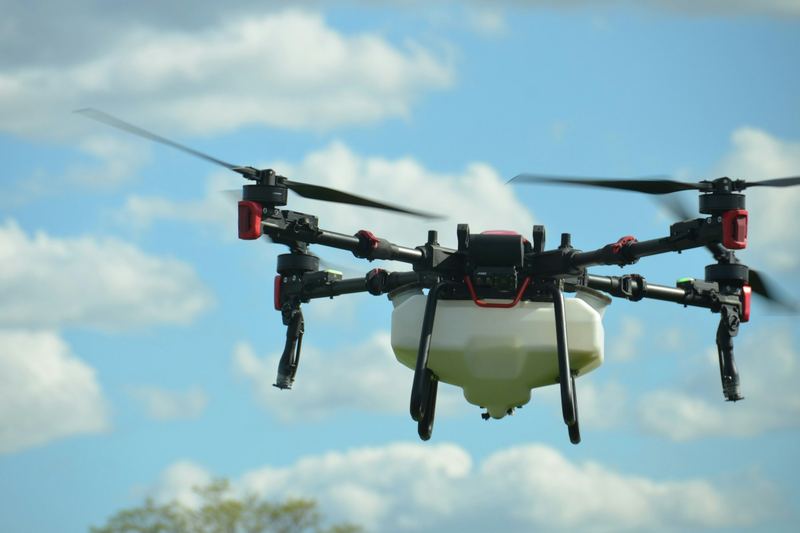
| Drone | Mist blower / knapsack | Tractor sprayer | |
|---|---|---|---|
| Slopes and terraces | Works if terrain is not too broken | Hard, slow work | Often impossible |
| Crew exposure | Operator at block edge | High | Lower, operator in cab |
| Water needed | Low volume per hectare | High | High |
| Tall canopies | Good on most, limited on very tall palms | Limited reach | Limited reach |
What the research says
In MADA paddies in Kedah, spraying time fell from about 80 hours to 24 hours and labour from four workers to one after switching to a drone. In an IPB University trial in Indonesia, drones used 20 litres of spray per hectare compared with 200 litres by knapsack. These are paddy studies; tree crop results will differ.
References
- Rosedi & Shamsi (2022), Comparative Efficacy of Drone Application in Chemical Spraying at Paddy Field MADA Kedah, IOP Conf. Ser.: Earth Environ. Sci. 1059 012002
- Andryan et al. (2025), Comparison of pesticide manual spraying with drone application on rice, IOP Conf. Ser.: Earth Environ. Sci. 1528 012017